

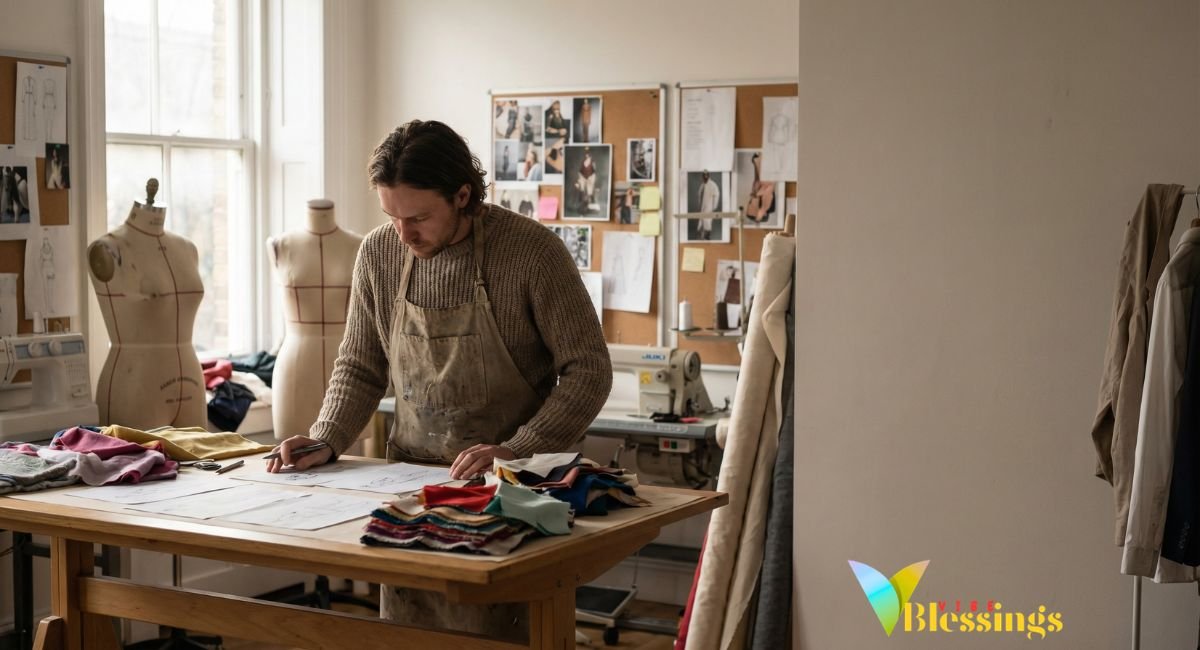
Introduction: The Intersection of Fabric and Philosophy
Fashion is among the most unforgiving creative industries. Designers operate under relentless seasonal cycles, cultural scrutiny, commercial constraints, and the perpetual demand for novelty. Unlike many artistic disciplines, fashion must simultaneously satisfy aesthetic vision, technical feasibility, brand identity, and market viability. A collection is not merely imagined it is engineered, merchandised, and judged in real time.
This pressure-cooker environment explains why the world often looks to designers for broader creative guidance. Their insights are forged at the crossroads of art and enterprise, where originality must coexist with execution. The philosophies of iconic designers extend beyond garments; they illuminate how creativity functions under constraint, uncertainty, and risk.
On Overcoming the Fear of Failure
“I think there is beauty in everything. What ‘normal’ people perceive as ugly, I can usually see something of beauty in it.” Alexander McQueen
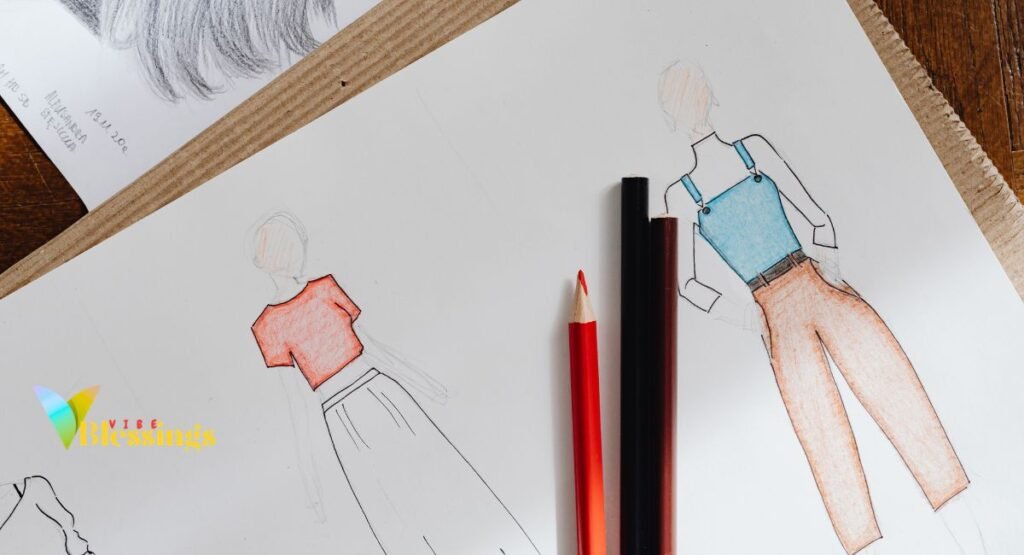
Why it matters
Creativity frequently collapses under the weight of perfectionism. The fear of producing something flawed, strange, or commercially uncertain can paralyze ideation. McQueen’s perspective reframes the creative act itself: innovation often begins where conventional judgment ends. What appears as error or deviation may contain the seed of originality.
In cognitive psychology, this principle aligns with divergent thinking the capacity to generate ideas outside dominant patterns. Many creative breakthroughs emerge not from correctness but from reinterpretation. McQueen’s philosophy encourages creators to treat anomalies as raw material rather than defects.
Applied insight
Instead of asking “Is this good?” early in the process, a more productive question is “What could this become?” This subtle shift transforms failure from a terminal outcome into an exploratory mechanism.
On Finding Your Unique Voice (Authenticity)
“In order to be irreplaceable, one must always be different.” Coco Chanel
Why it matters
Markets reward familiarity, yet creative distinction requires deviation. This paradox defines nearly every creative profession. Chanel’s statement is not about eccentricity for its own sake, but strategic differentiation the deliberate cultivation of identity.
From a branding and innovation standpoint, sameness is rarely sustainable. Whether in fashion, design, media, or entrepreneurship, competitive advantage is often perceptual. Differentiation becomes both a creative and economic necessity.
Authenticity, however, is widely misunderstood. It is not simply self-expression; it is coherence over time. Distinct creators develop recognizable signatures patterns of taste, decision-making, and aesthetic judgment that audiences intuitively associate with them.
Applied insight
Creators should focus less on chasing trends and more on refining internal taste architectures. Originality compounds when choices consistently reflect a point of view rather than external imitation.
On Creativity as Intrinsic Motivation
“Improvise. Become more creative. Not because you have to, but because you want to.” Karl Lagerfeld
Why it matters
Creativity driven solely by obligation often results in derivative output. Lagerfeld’s philosophy emphasizes intrinsic motivation, a core predictor of sustained creative performance. Research in behavioral science consistently shows that autonomy and internal drive enhance problem-solving capacity and originality.
Compulsion may produce productivity, but curiosity produces innovation. The distinction is subtle yet critical. Creativity thrives when experimentation is voluntary rather than defensive.
Applied insight
When possible, creators should design environments that encourage play, exploration, and intellectual freedom. Innovation rarely emerges from rigid compliance structures.
On Fashion as Communication
“Fashion is an instant language.” Miuccia Prada
Why it matters
Design is fundamentally communicative. Even highly conceptual work operates within symbolic systems that audiences decode. Prada’s observation underscores a broader truth: creativity is rarely isolated self-expression; it is interaction.
In communication theory, visual design functions as a semiotic system transmitting meaning through form, color, texture, and composition. Fashion compress’s identity, mood, status, and ideology into immediate perception.
Applied insight
Creators across disciplines benefit from viewing their output as dialogue rather than declaration. The question shifts from “What am I making?” to “What is this saying, and to whom?”
On the Power of Perspective
“Black is modest and arrogant at the same time.” Yohji Yamamoto
Why it matters
Creativity often emerges from mastering paradox. Yamamoto’s statement captures the duality inherent in design: simplicity can signal restraint or dominance; minimalism can evoke clarity or severity.
High-level creative thinking frequently involves tension management balancing oppositional forces such as novelty vs. familiarity, complexity vs. accessibility, and expression vs. function.
Applied insight
Instead of eliminating contradictions, creators can leverage them. Depth frequently arises not from resolution but from coexistence.
On Discipline, Isolation, and Craft
While creativity is romanticized as spontaneous inspiration, professional designers consistently highlight structure, rigor, and deliberate withdrawal.
“I work all the time. Work and discipline are the same thing for me.” Karl Lagerfeld
Why it matters
Creative mythology often glorifies bursts of genius while ignoring systems of production. Sustained creativity depends less on mood and more on operational consistency. Discipline protects creators from the volatility of inspiration.
Isolation, similarly, functions not as retreat but recalibration. Periods of cognitive disengagement allow subconscious processing, pattern integration, and conceptual synthesis.
Applied insight
Creativity benefits from rhythms rather than constant stimulation. Deep work requires cognitive bandwidth rarely available in fragmented environments.
The Creativity Toolkit: A Practical Framework Inspired by Fashion Icons
The philosophies of designers translate naturally into a broader creative methodology. Below is a distilled framework applicable to students, entrepreneurs, and creators across fields.
| Principle | Designer Insight | Practical Application |
| Reinterpret Failure | McQueen: Beauty in the unconventional | Treat flawed ideas as iterations, not endpoints |
| Differentiate Deliberately | Chanel: Be irreplaceably different | Develop recognizable decision patterns |
| Cultivate Intrinsic Drive | Lagerfeld: Create by desire | Build autonomy-supportive workflows |
| Design for Communication | Prada: Fashion as language | Consider audience perception early |
| Leverage Contradictions | Yamamoto: Contrast creates depth | Use tension to enhance originality |
| Systemize Creativity | Lagerfeld: Discipline equals output | Prioritize routines over sporadic motivation |
This mirrors principles found in design thinking, innovation strategy, and cognitive performance research. Creativity is not merely imaginative capacity; it is a structured process involving observation, experimentation, iteration, and refinement.
On Style & Individuality
“Fashion is what you buy. Style is what you do with it.”
“Elegance is not about being noticed, it’s about being remembered.”
“Style is a way to say who you are without having to speak.” — Rachel Zoe
“Be yourself. Everyone else is already taken.” — Oscar Wilde
On Fashion Philosophy
“Fashion fades, only style remains the same.” — Coco Chanel
“Trends come and go. Personal style is eternal.”
“Clothes mean nothing until someone lives in them.” — Marc Jacobs
“Luxury must be comfortable, otherwise it is not luxury.” — Coco Chanel
On Confidence & Attitude
“Dress like you’re already famous.”
“Confidence is the best outfit. Rock it and own it.”
“Fashion is armor to survive the reality of everyday life.” — Bill Cunningham
“You can have anything you want in life if you dress for it.” — Edith Head
On Creativity & Expression
“Fashion is the art; designers are the gods.” — Marc Jacobs
“Style is creativity made visible.”
“Don’t design clothes. Design a statement.”
“Fashion is an instant language.” — Miuccia Prada
Short Catchy Fashion Lines (Great for Captions)
“Slay the day.”
“Less perfection, more authenticity.”
“Style speaks louder than words.”
“Wear the confidence.”
“Chic happens.”
Style vs. Fashion: A Lesson in Longevity
“Fashion fades, only style remains the same.” Coco Chanel
Why it matters
Trend cycles reward novelty, but enduring creators prioritize coherence. The distinction reflects a broader innovation principle: short-term relevance differs from long-term identity.
In business and creative strategy, this maps onto signal vs. noise. Trends are reactive signals; style represents foundational architecture. Sustainable creative careers emerge from mastering the latter.
Applied insight
Creators should differentiate between temporary adaptation and core identity shifts. Not every change constitutes evolution.
Frequently Asked Question About Fashion
What is a famous quote from a fashion designer?
One of the most iconic:
“In order to be irreplaceable, one must always be different.” Coco Chanel
Why it’s famous:
It perfectly captures the philosophy of individuality and has become a universal principle in fashion, branding, and creativity.
What is a famous quote about creativity?
A timeless classic often cited in creative disciplines:
“Creativity is intelligence having fun.” Albert Einstein
Why it resonates:
It reframes creativity as playful exploration rather than mysterious genius, making it relatable across industries.
What was Ann Lowe’s famous quote?
A historically important line attributed to Ann Lowe, pioneering American fashion designer:
“I love my clothes, and I’m particular about who wears them.”
Why it matters:
The quote reflects her pride, artistic standards, and quiet defiance during a time when she faced significant racial barriers in the fashion industry.
What is a catchy fashion quote?
A frequently used and highly memorable example:
“Fashion fades, style is eternal.” Coco Chanel
Why it works:
Short, rhythmic, and conceptually powerful ideal for social media, captions, and branding.
Conclusion: Your Own Aesthetic Journey
The world’s most influential designers did not merely produce clothing they constructed philosophies of perception, risk, discipline, and originality. Their insights reveal creativity as a system rather than a mystery, a practice rather than an accident.
“I don’t design clothes. I design dreams.” Ralph Lauren
Creativity, at its highest level, transcends medium. Whether one works with fabric, code, writing, photography, or business models, the underlying challenge remains identical: transforming abstract vision into tangible experience.
Every creator, regardless of field, is engaged in a form of design. The essential task is not imitation of iconic voices, but cultivation of one’s own aesthetic logic the internal framework guiding choices, judgments, and innovations.
Your work, like a collection, becomes your signature.

Hi, I’m Taimoor Abid, founder of Vibe Blessings! I specialize in creating SEO-optimized inspirational content.