

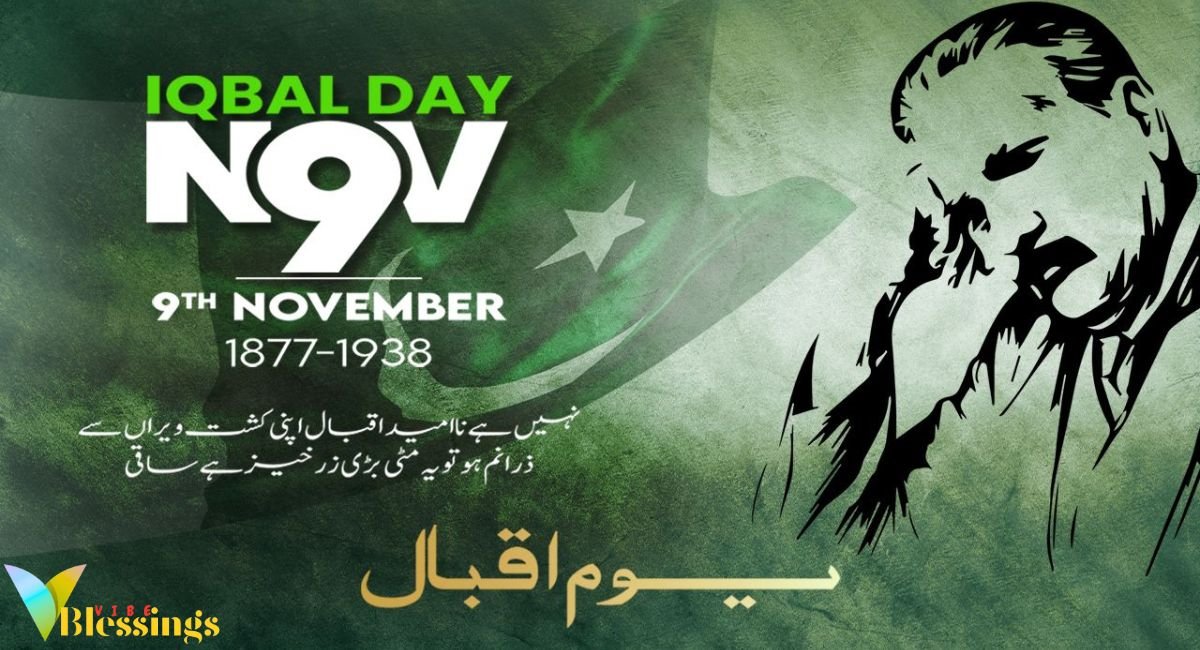
Every year on November 9, millions in Pakistan and the global diaspora commemorate Iqbal Day (Yōm-e Iqbāl), the birth anniversary of Allama Muhammad Iqbal (1877–1938). Celebrated with national pride in Pakistan, the figure of Iqbal is far more than a national poet; he stands as a colossal intellectual bridge between the historical East and the philosophical West.
For an American audience, Iqbal’s legacy offers a unique lens through which to view themes of individual empowerment, spiritual democracy, and a critique of purely materialistic modernism issues as vital today in New York or San Francisco as they were in colonial India.
🎓 The Scholar Who Spoke to Two Worlds
Iqbal’s journey was a remarkable fusion of civilizations. Born in Sialkot (now Pakistan), he was deeply rooted in the philosophical and poetic traditions of the East, writing luminous verses in Urdu and Persian. However, he was also a modern man who pursued advanced degrees in the West, earning a B.A. from Cambridge and a Ph.D. from the University of Munich.
This experience gave him a rare, dual perspective: he could absorb the intellectual rigor of Western philosophy (studying figures like Kant, Hegel, and Nietzsche) while simultaneously offering a profound, spiritually grounded critique of Western materialism and colonialism.
🌟 The Central Idea: The Philosophy of Khudi (Selfhood)
The core of Iqbal’s universal message, and the concept most relevant to modern individualistic cultures, is Khudi (pronounced khoo-dee), which translates roughly to Selfhood or the Ego.
- Beyond Individualism: While Khudi advocates for a strong, assertive, and creative self, it differs sharply from the self-centered individualism often criticized in the West.
- A Call to Action: For Iqbal, Khudi is not a static concept but a continuous process of self-realization. It is a spiritual and psychological call to overcome apathy, reject intellectual servitude, and realize one’s full potential as an independent, purposeful agent in the universe a concept that resonates with the American values of self-reliance and the pursuit of excellence.
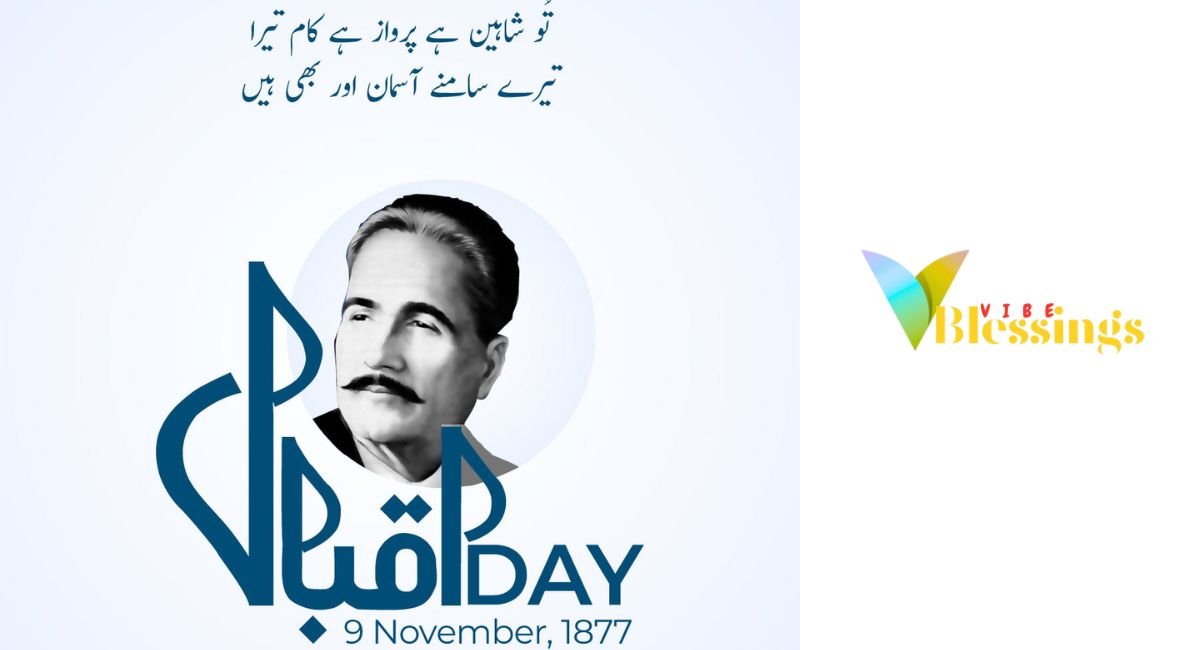
- The Shaheen (The Falcon): His most famous poetic symbol for this ideal self is the Shaheen (Falcon/Eagle). The Shaheen is a solitary, high-soaring bird that never builds a nest on the ground, does not eat carrion, and lives by constant struggle and self-earned sustenance. It is a powerful metaphor for unwavering self-respect and ambition.
“You, the brave falcon, have an eternal spring;
In this world, you have no need for a dwelling.”
(A verse embodying the spirit of self-reliance and dynamism.)
🏛️ A Vision for Spiritual Democracy
Iqbal was highly critical of Western democracy when it became purely secular and materialistic a system he felt was often co-opted by capitalistic interests, saying:
“The Parliament’s business is nothing but a competition of capitalists, in which the speaker is the one whose pockets are warm.”
However, he was not against the idea of representative government. He advocated for a Spiritual Democracy, where governance and individual liberty are informed by transcendent moral principles, justice, and the values of the community (Ummah). This philosophical stance encourages modern political discourse to reconnect freedom with ethical responsibility, a discussion highly relevant in today’s polarized political landscape.
📖 Iqbal’s Lasting Influence
While Iqbal is historically remembered for providing the intellectual framework and vision for a separate Muslim homeland (the idea that eventually led to the creation of Pakistan in 1947), his global influence extends far wider:
- Literary Bridge: His works, translated into multiple languages including English, German, and Turkish, are studied in universities worldwide, appreciated for their lyrical beauty and profound intellectual depth.
- Influence on Global Thought: Scholars recognize parallels between his concept of the dynamic, striving Self and the existentialist concepts of philosophers like Nietzsche and Bergson, even as Iqbal grounds his self in a transcendental, spiritual source.
- The Voice of Reawakening: His message remains a powerful call for decolonization of the mind, urging nations emerging from colonial rule to define their future not through mimicry, but through their own unique spiritual and cultural heritage.
Inspiring Quotes by Allama Muhammad Iqbal
The Power of Selfhood (Khudi)
This is arguably Iqbal’s most quoted couplet, perfectly summarizing his philosophy of self-realization and destiny.
| Original Urdu/Persian (Romanized) | English Translation | Theme |
| “Khudi ko kar buland itna, ke har taqdeer se pehle, Khuda bande se khud pooche, bata teri raza kya hai.” | “Elevate your Self (Khudi) to such a degree, that before every decree, God Himself asks the person: ‘Tell me, what is your wish?'” | Destiny & Self-Determination |
| “Apne man mein doob kar, paa ja surāgh-e-zindagi, Tu agar mērā nahīn bantā, na ban, apnā to ban.” | “Dive into your own heart, and find the secret of life; If you cannot be mine, do not be; at least be your own.” | Self-Discovery & Authenticity |
| “Nahiñ terā nasheman qasr-e-sultānī ke gunbad par, Tū shāhīñ hai, baserā kar pahāṛoñ kī chaṭānoñ meiñ.” | “Your abode is not on the dome of a royal palace, You are an eagle (Shaheen); make your home on the rocks of the mountains.” | Ambition & Fearlessness |
The Call to Action and Struggle
Iqbal was a poet of dynamism, urging people to reject passivity and engage with the world through continuous effort.
| Original Urdu/Persian (Romanized) | English Translation | Theme |
| “Sitaaron se āge jahāñ aur bhī haiñ, Abhi ishq ke imtihāñ aur bhī haiñ.” | “There are worlds beyond the stars (more destinations), There are still more tests of love (passion/struggle) to face.” | Limitless Potential |
| “Yaqīn mohkam, amal paiham, mohabbat fātah-e-ālam, Jihād-e-zindagānī** meñ haiñ ye mardoñ kī shamshīreñ.”** | “Firm conviction, continuous action, and love are the conquerors of the world; These are the swords of men in the struggle of life.” | The Formula for Success |
| “Zarā nam ho to ye mitṭī** baḍī** zarkhēz hai sāqī.”** | “This soil is very fertile; all it needs is a little moistening, O Sāqī** (cup-bearer/inspiration).”** | Hope & Potential (Addressing the Indian Muslims) |
Critique of Modernity and Wisdom
Iqbal often reflected on the nature of truth, knowledge, and the pitfalls of a purely rational, materialistic existence.
| Original Urdu/Persian (Romanized) | English Translation | Theme |
| “Dil se jo bāt nikaltī** hai, asar rakhtī hai, Par nahīñ tāqat-e-parwāz magar rakhtī** hai.”** | “The word that issues from the heart, it carries influence, Though it may not have the strength of flight, yet it possesses wings.” | Sincerity and Impact |
| “Achchhā hai dil ke sāth rahe pāsbān-e-aql, Lekin kabhi kabhi ise tanhā bhī chhoḍ** de.”** | “It is good that the intellect remains the heart’s protector, But sometimes, leave it alone (to its own intuitive truth).” | Intuition vs. Intellect |
| “Nations are born in the hearts of poets, they prosper and die in the hands of politicians.” | “Nations are born in the hearts of poets, they prosper and die in the hands of politicians.” | Vision vs. Politics |
🗓️ How the Day is Observed
Iqbal Day on November 9th is generally a public holiday in Pakistan (often observed nationwide) and is marked by academic seminars, poetry recitations, and cultural events. These tributes aim to disseminate his message to the younger generation, reinforcing the values of education, courage, determination, and self-respect that he tirelessly championed.
Iqbal’s vision is a potent reminder that true progress must be measured not just by material wealth, but by the moral, intellectual, and spiritual growth of the individual. For anyone seeking inspiration for a life of purpose and profound self-worth, the “Poet of the East” remains a timeless guide.
That’s a wonderful request! Allama Muhammad Iqbal’s work is packed with powerful, universal wisdom. His verses, originally in Urdu and Persian, are famous for their profound spiritual, philosophical, and motivational themes.
Here are some of his most inspirational and famous quotes/couplets, along with their English translations, emphasizing themes of Selfhood (Khudi), action, and vision:
Conclusion: A Timeless Call to Self-Awakening
As the world marks Iqbal Day on November 9th, the celebration extends far beyond any national boundary. Allama Muhammad Iqbal was a philosopher who diagnosed the spiritual malaise of the modern age the struggle between the relentless pursuit of material gain and the deeper, timeless need for purpose.
His philosophy of Selfhood (Khudi) is not a relic of history but a dynamic blueprint for personal and collective empowerment. It challenges us today, regardless of geography or background, to look inward, reject intellectual dependency, and embrace the high-flying courage of the Shaheen. Iqbal’s final, profound gift is the recognition that true freedom lies not in breaking external chains, but in mastering the self to realize one’s fullest creative potential. By engaging with his message, we unlock a powerful Eastern wisdom that speaks directly to the soul of the contemporary world.
FAQ about Allama Muhammad Iqbal
What is the significance of the Shaheen (Eagle) in his poetry?
The Shaheen is Iqbal‘s most powerful metaphor for the ideal individual—a creature that is self-reliant, courageous, independent, and ambitious, never settling in a comfort zone and soaring to new heights.
What was his primary critique of Western Civilization?
He criticized its excessive materialism, secularism, and lack of spiritual/ethical foundation, arguing that systems like secular democracy often become tools for imperialism and capitalism that count people, but do not weigh their moral worth.
What was Iqbal’s view on education?
He believed education must be a tool for character building and the development of Khudi. It should produce individuals who are scientifically advanced yet spiritually and ethically grounded, rather than just producing clerks for an administrative system.
What key political role did Iqbal play?
As a political thinker, he provided the intellectual foundation and vision for a separate Muslim state in the northwest of British India, a concept formally proposed in his 1930 Allahabad Address, which profoundly influenced the creation of Pakistan.
Name two of his most famous poetic works.
His major collections include Asrar-e-Khudi (The Secrets of the Self) and Baang-e-Dara (The Call of the Marching Bell).

Hi, I’m Taimoor Abid, founder of Vibe Blessings! I specialize in creating SEO-optimized inspirational content.